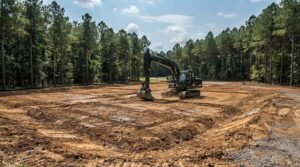
South Louisiana gets more than 60 inches of rain a year, and much of Acadiana sits on flat, clay-heavy ground that doesn’t drain on its own. If water sits in your yard for days after a storm, creeps toward your slab, or washes out your driveway, the problem usually isn’t the rain — it’s how your property is graded and drained. This guide walks through the warning signs, the most common drainage fixes, and when it’s time to call a professional drainage and site work contractor.
Why Drainage Matters So Much in Acadiana
Poor drainage is more than a soggy lawn. Standing water softens the soil under foundations, driveways and outbuildings, which can lead to settling and cracks. It breeds mosquitoes, kills grass and trees, and in heavy storms it can push water into garages and living spaces. Fixing drainage early is almost always cheaper than repairing the damage it causes.
Warning Signs Your Property Has a Drainage Problem
- Water that stands in the yard more than 24–48 hours after rain
- Puddles or wet soil along the foundation or slab edge
- Erosion channels, exposed roots or washed-out gravel
- Driveway ruts, potholes or a soft, muddy shoulder
- Mildew, musty smells or water stains in a garage or crawl space
- Neighbors’ runoff flowing across your lot
Common Drainage Solutions
1. Regrading and Positive Slope
The simplest and most effective fix is often grading: reshaping the soil so water flows away from structures. The general rule of thumb is a drop of about six inches over the first ten feet away from a foundation. On larger lots, we shape swales — shallow, grassed channels — to carry water to a ditch, culvert or low area.
2. French Drains
A French drain is a gravel-filled trench with a perforated pipe that collects groundwater and surface water and carries it away. They work well along foundations, at the base of slopes, and in yards that stay saturated.
3. Culverts and Ditch Work
Driveways that cross a roadside ditch need a properly sized culvert pipe so water can pass underneath. Undersized or crushed culverts are one of the most common causes of flooded driveways in rural Acadiana. Cleaning and re-cutting existing ditches restores the flow your property was designed for.
4. Catch Basins and Underground Pipe
Where water collects in low spots or comes off downspouts, catch basins tie into solid underground pipe and send water to an approved outlet instead of letting it pond.
The best drainage plan starts with the ground itself — get the grade right first, then add pipe and structures where they’re needed.
DIY vs. Hiring a Professional
Small fixes like extending downspouts or clearing leaves from a ditch are great DIY jobs. But regrading a yard, installing culverts or digging French drains requires the right equipment, laser-level accuracy and knowledge of local drainage rules. A mistake can send water toward your house — or your neighbor’s.
How Xcavate Land Solutions Can Help
Our crew handles complete drainage projects across Lafayette, Youngsville, Broussard and surrounding Acadiana communities, including:
- Site evaluation to find where water is coming from and where it needs to go
- Yard and lot regrading with laser-level precision
- French drains, swales and catch basins
- Culvert installation and ditch cleaning
- Gravel driveway repair and drainage-friendly driveway builds
If water is causing problems on your property, request a free estimate or call (337) 205-2209. We’ll walk the property, explain the options in plain language and give you a clear price.
SHARE THIS ARTICLE
XCAVATE LAND SOLUTIONS
Locally owned land clearing, excavation, grading, drainage and site preparation contractor serving Lafayette, Youngsville, Broussard and the greater Acadiana area. Get a free estimate →
NEED HELP WITH YOUR PROJECT?
Talk to the Xcavate crew about land clearing, excavation, grading or drainage anywhere in Acadiana.
GET A FREE QUOTEor call (337) 205-2209RECENT ARTICLES
The Benefits of Professional Land Clearing